
Product details
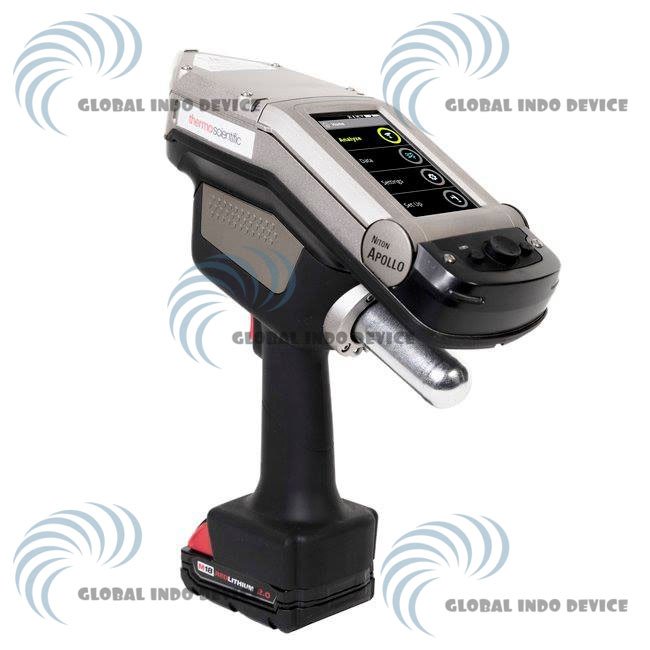
Thermo Scientific Niton Apollo LIBS Analyzer for Fast Elemental Analysis
The Thermo Scientific Niton Apollo LIBS Analyzer is a handheld analytical instrument designed for rapid elemental analysis using Laser Induced Breakdown Spectroscopy LIBS. Built for industrial and field environments, this analyzer delivers fast reliable results while maintaining a compact and ergonomic handheld design.
Understanding LIBS Technology
What Is Laser Induced Breakdown Spectroscopy
Laser Induced Breakdown Spectroscopy is an analytical technique that uses a focused laser pulse to create a micro plasma on the surface of a sample. The emitted light is analyzed to identify and quantify elemental composition in real time.
Advantages of LIBS for Field Analysis
LIBS technology enables immediate multi element detection including light elements that are difficult to measure with other portable techniques. It allows direct analysis of solid materials with minimal or no sample preparation.
Key Features of Thermo Scientific Niton Apollo
Handheld and Rugged Design
The Niton Apollo is engineered for portability and durability making it suitable for demanding industrial and outdoor environments.
Rapid Elemental Results
Elemental analysis is completed within seconds enabling high throughput testing and real time decision making in the field.
Broad Element Detection
The analyzer supports detection of a wide range of elements across metals alloys and industrial materials depending on the application mode.
User Friendly Interface
An intuitive touchscreen interface simplifies operation data review and workflow management for users of all experience levels.
Low Operating Cost
LIBS technology eliminates the need for consumables gases or chemicals reducing long term operating expenses.
Applications of Thermo Scientific Niton Apollo LIBS Analyzer
Metal and Alloy Identification
Used for alloy sorting positive material identification and quality control in manufacturing and recycling operations.
Mining and Exploration
Supports rapid screening of ores and geological samples to assist exploration and grade control activities.
Industrial Quality Control
Enables verification of raw materials finished goods and critical components directly on the production floor.
Research and Development
Suitable for laboratories and research facilities requiring fast elemental analysis without complex sample preparation.
Benefits of Using Thermo Scientific Niton Apollo
Real Time Decision Making
Immediate results reduce delays associated with laboratory testing and improve operational efficiency.
Portable Field Operation
The handheld format allows testing directly at the point of need without transporting samples.
Consistent Analytical Performance
Advanced calibration models and stable laser technology provide reliable and repeatable measurements.
Safe and Controlled Operation
Built in safety features ensure controlled laser operation and user protection during analysis.
Data Management and Connectivity
Integrated Data Storage
Stores thousands of analysis results with associated spectral information.
Flexible Data Transfer
Supports wireless and wired connectivity options for exporting data to computers and reporting systems.
Software Integration
Compatible with Thermo Scientific software solutions for data analysis reporting and compliance documentation.
Why Choose Thermo Scientific Niton Apollo LIBS Analyzer
The Thermo Scientific Niton Apollo LIBS Analyzer combines speed portability and analytical capability in a single handheld device. Its ability to deliver immediate elemental results makes it a practical solution for industries that require fast accurate and cost effective material analysis.
Specifications ;
General Information
Product name
Thermo Scientific Niton Apollo LIBS Analyzer
Analytical method
Laser Induced Breakdown Spectroscopy LIBS
Instrument format
Handheld portable analyzer
Intended analysis
Real time elemental identification
Primary application focus
Metal and alloy verification
Laser and Excitation System
Laser source
Pulsed solid state laser
Operating wavelength
1064 nm
Energy output
Optimized pulse energy for stable plasma formation
Pulse repetition rate
High frequency operation for rapid measurements
Spot size
Micro scale laser spot for localized surface analysis
Safety classification
Class 3B with integrated interlock protection
Elemental Detection Capabilities
Elemental coverage
Wide range of alloying elements including aluminum silicon titanium chromium manganese iron nickel cobalt copper molybdenum and tungsten
Carbon analysis
Optimized performance for carbon measurement in steels
Material compatibility
Ferrous and non ferrous metals industrial alloys and components
Grade recognition
Automatic alloy grade identification
Analytical Performance
Typical analysis time
Approximately 1 to 2 seconds per measurement
Measurement approach
Point and shoot testing
Measurement consistency
High repeatability using advanced spectral processing
Result reliability
Comparable to laboratory methods for alloy sorting
Optical and Spectrometer System
Spectrometer design
High resolution optical emission spectrometer
Wavelength optimization
Configured for metallic and alloy spectra
Signal detection
Multi channel optical collection system
User Interface and Software
Display type
Integrated color touchscreen
Interface design
Graphical icon based navigation
Software functions
Live results display alloy comparison pass fail indicators data labeling and reporting
User access
Multiple user levels with password protection
Data Storage and Connectivity
Internal memory
Stores thousands of measurements with spectra
Export formats
CSV PDF and proprietary formats
Connection options
USB Wi Fi and Bluetooth
Software integration
Compatible with Thermo Scientific data management platforms
Power and Battery System
Battery technology
Rechargeable lithium ion battery
Operating duration
Supports full work shift depending on usage
Charging solutions
AC charger and docking station
Battery replacement
Tool free battery swap design
Physical Characteristics
Instrument weight
Approximately 1 point 8 kilograms including battery
Ergonomic design
Balanced handheld form for extended use
Housing construction
Rugged industrial grade enclosure
Environmental resistance
Designed for harsh industrial conditions
Operating Environment
Temperature range
Typical operation between 0 and 45 degrees Celsius
Storage conditions
Extended temperature tolerance for transport
Humidity tolerance
High humidity operation non condensing
Safety and Compliance
Laser control
Integrated contact sensor and automatic beam shutoff
User protection
Controlled laser emission during analysis
Compliance standards
CE RoHS and applicable laser safety regulations
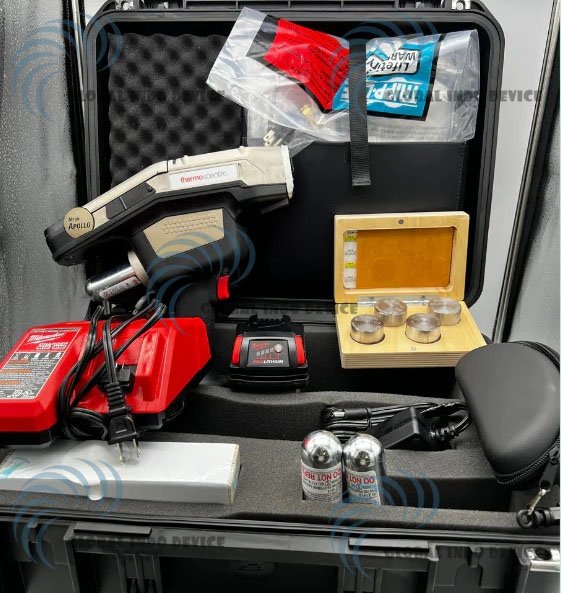
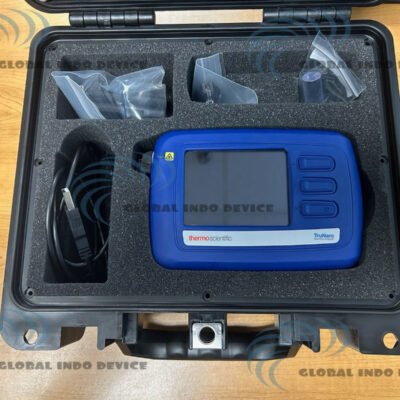
Package includes:
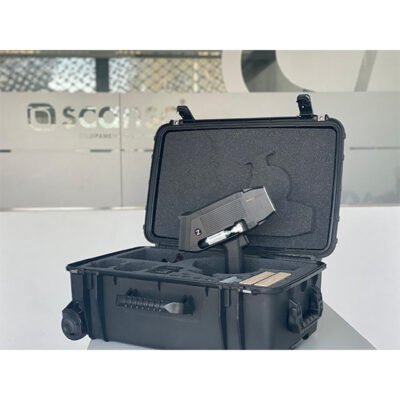
– Locking shielded carrying case
– Two (2) Milwaukee M18 Redlithium High Demand CP2.0 battery packs
– One (1) Milwaukee M18 & M12 multi-voltage charger
– Five (5) Thermo Scientific analytical argon cartridges
– Setup standards
– Laser safety glasses
– Instrument cleaning kit
– Safety lanyard and carabiner
– PC connection cable

There are no reviews yet.